“Good Timber” by Douglas Malloch is a masterpiece that weaves vivid imagery, profound wisdom, and timeless inspiration.
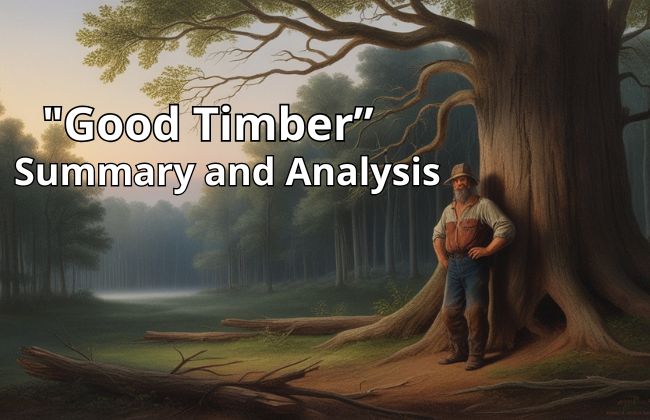
This poem uses the grandeur of nature as a powerful metaphor to explore themes of resilience, growth, and character. Through its lyrical lines, Malloch likens the strength of towering trees to the endurance of individuals who have faced and overcome life’s struggles.
The poem suggests that true greatness and inner fortitude are forged, not in comfort, but in the face of adversity.
With its uplifting tone, “Good Timber” resonates deeply with readers seeking motivation, reminding us that challenges serve as the soil in which our character takes root and flourishes.
Join us as we dive deeper into this poetic gem, uncovering its layers of meaning and the enduring lessons it offers.
Table of Contents
Good Timber by Douglas Malloch
The tree that never had to fight
For sun and sky and air and light,
But stood out in the open plain
And always got its share of rain,
Never became a forest king
But lived and died a scrubby thing.

The man who never had to toil
To gain and farm his patch of soil,
Who never had to win his share
Of sun and sky and light and air,
Never became a manly man
But lived and died as he began.

Good timber does not grow with ease,
The stronger wind, the stronger trees,
The further sky, the greater length,
The more the storm, the more the strength.
By sun and cold, by rain and snow,
In trees and men good timbers grow.

Where thickest lies the forest growth
We find the patriarchs of both.
And they hold counsel with the stars
Whose broken branches show the scars
Of many winds and much of strife.
This is the common law of life.
Summary
“Good Timber” by Douglas Malloch is a motivational poem that compares human life to the growth of trees. The poem’s central message emphasizes that strength and resilience are cultivated through adversity and challenges.
Malloch contrasts trees that grow in easy conditions, with abundant sunlight and rain, with those that face storms and harsh environments. Similarly, he draws a parallel to the lives of men, suggesting that those who endure struggles and hardships are the ones who grow into strong and resilient individuals.
Ultimately, the poem delivers a universal truth—that striving and enduring difficulty are integral to personal growth and achievement.
Themes in Good Timber
Malloch explores the following key themes in this poem:
a. Struggle and Growth
The poem’s central theme is that hardship is a necessary part of life that leads to growth and success. Trees that endure storms and winds become stronger, just as people who overcome challenges build resilience.
b. Fulfillment Through Effort
Malloch argues that a fulfilling life cannot be achieved through ease and complacency. Just as trees exposed to difficulty grow taller and stronger, individuals gain deeper satisfaction when they achieve success through effort and determination.
c. Nature as a Metaphor for Life
The poem uses the natural world, specifically trees and forests, as an extended metaphor for human existence.
Malloch ties nature’s laws to human life, illustrating how the same principles of struggle and survival apply to both.
d. The Commonality of Life’s Laws
The final lines of the poem emphasize the universality of struggle as a fundamental law of life. Both trees and men face trials, but it is through these trials that they gain wisdom and strength.
Structure and Form
Malloch’s poem is structured with a clear and consistent form:
- Stanza Length: The poem comprises four six-line stanzas, making it easy to follow and engaging for readers.
- Rhyme Scheme: Each stanza follows an AABBCC rhyme scheme, which contributes to the lyrical, almost song-like quality of the poem.
- Meter and Rhythm: The steady rhythm mirrors the enduring process of growth and struggle, underscoring the poem’s message of steady progress through adversity.
- Conciseness: The brevity of the lines and the simple vocabulary ensure accessibility, making the poem’s moral lessons universal and easy to grasp.
Literary Devices in Good Timber
Malloch employs various literary devices to enhance the depth and impact of the poem’s message.
a. Extended Metaphor
The poem as a whole is an extended metaphor, comparing trees to humans. Trees that grow in the open, with no challenges, are likened to individuals who lead easy, unchallenging lives. These trees remain “scrubby,” while those that face storms grow tall and strong.
b. Alliteration
Alliteration is used to create rhythm and reinforce key ideas.
For example:
- “Broken branches” (stanza four) emphasizes the scars left by struggle.
- “Storm and strength” (stanza three) places focus on how challenges lead to empowerment.
c. Imagery
Rich imagery is present throughout the poem:
- “Sun and sky and air and light” (stanza one) paints a vivid picture of a tree’s environment.
- “Broken branches show the scars” (stanza four) evokes the hardships both trees and humans might endure, creating a strong visual.
d. Symbolism
- The tree symbolizes human life.
- Wind, storms, and rain represent struggles and hardships.
- Good timber symbolizes strength, maturity, and resilience gained through overcoming adversity.
e. Enjambment
Malloch uses enjambment, where lines flow into one another without punctuation, as seen in:
“And they hold counsel with the stars
Whose broken branches show the scars.”
This device creates a sense of continuity, mimicking the ongoing challenges of life.
f. Repetition
Key phrases, like “For sun and sky and air and light,” are repeated to emphasize the natural elements that both trees and humans seek in order to grow.
Analysis of Good Timber
Stanza One
The tree that never had to fight
For sun and sky and air and light,
But stood out in the open plain
And always got its share of rain,
Never became a forest king
But lived and died a scrubby thing.
The opening stanza introduces the “tree that never had to fight.” This tree, standing in an optimal and easy environment, symbolizes a privileged life. While such an existence may seem desirable, Malloch critiques it, pointing out that this tree will “never become a forest king.” Without challenges, neither trees nor humans can achieve greatness or inner strength.
Stanza Two
The man who never had to toil
To gain and farm his patch of soil,
Who never had to win his share
Of sun and sky and light and air,
Never became a manly man
But lived and died as he began.
The second stanza shifts focus to a similar analogy involving a man. Like the first tree, a man who never struggles or works for his survival becomes stagnant, failing to mature or improve. He “lived and died as he began,” emphasizing the stagnation of an unchallenged life.
Stanza Three
Good timber does not grow with ease,
The stronger wind, the stronger trees,
The further sky, the greater length,
The more the storm, the more the strength.
By sun and cold, by rain and snow,
In trees and men good timbers grow.
This stanza is a celebration of struggle. Through hardship, Malloch explains, both “trees and men” become strong. The imagery of harsh weather (“sun and cold, by rain and snow”) illustrates the necessity of enduring diverse challenges. This stanza reflects the life lesson that adversity is a precursor to greatness.
Stanza Four
Where thickest lies the forest growth
We find the patriarchs of both.
And they hold counsel with the stars
Whose broken branches show the scars
Of many winds and much of strife.
This is the common law of life.
The final stanza ties the narrative together, describing the “patriarchs” of both trees and men—the leaders who emerge stronger because of the difficulties they have faced. “Broken branches” symbolize the scars of struggle, and the “common law of life” underscores the universal reality that resilience comes from adversity.
Final Insights
Malloch reminds readers that true strength is not innate but earned through perseverance. By the end of the poem, it’s clear that the value of life lies in facing and overcoming challenges. The poem serves as a powerful encouragement to endure life’s storms and trust in the process of growth.
You might also like: