Allen Ginsberg’s Howl stands as a groundbreaking work that shook the foundations of American literature when it was first published in 1956.
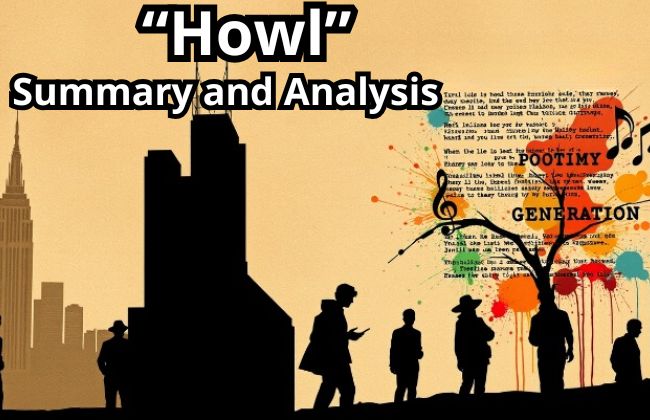
Bold, unflinching, and unapologetic, this poem became a manifesto for the Beat Generation—a group of writers and thinkers who rejected social norms and sought raw, unfiltered truth.
Howl captures the chaos, pain, and beauty of a society in flux, painting vivid pictures of post-war disillusionment while celebrating the resilience of the human spirit. Full of fragmented imagery and sprawling, jazz-like rhythms, it defied conventional poetic forms, making it as revolutionary in style as it was in content.
The poem dives deeply into themes of alienation, mental health, sexuality, and rebellion, cementing its place as a lightning rod for both praise and controversy.
Banned and challenged for obscenity upon release, Howl became not only a literary classic but also a symbol of free expression. As we explore its depths, we uncover why this poem still resonates today.
Table of Contents
Howl By Allen Ginsberg
I
I saw the best minds of my generation destroyed by
        madness, starving hysterical naked,
dragging themselves through the negro streets at dawn
        looking for an angry fix,
angelheaded hipsters burning for the ancient heavenly
        connection to the starry dynamo in the machin-
        ery of night,
who poverty and tatters and hollow-eyed and high sat
        up smoking in the supernatural darkness of
        cold-water flats floating across the tops of cities
        contemplating jazz,
who bared their brains to Heaven under the El and
        saw Mohammedan angels staggering on tene-
        ment roofs illuminated,
who passed through universities with radiant cool eyes
        hallucinating Arkansas and Blake-light tragedy
        among the scholars of war,.. See all poem
Summary
Allen Ginsberg’s Howl is one of the definitive works of the Beat Generation, a groundbreaking literary movement in mid-20th century America. Written between 1954 and 1955 and first performed in 1955, the poem was published in Howl and Other Poems in 1956.
Divided into three sections, Howl is a passionate and raw exploration of the counterculture, critiquing mainstream American society and celebrating those marginalized for their unconventional lives.
The poem expresses a mournful awareness of societal decay while simultaneously celebrating the liberating spirit of rebellion.
Obscenity Trial and Legacy
When published in 1956, ‘Howl’ attracted controversy due to its explicit depictions of sexuality and substance use. Ginsberg’s publisher, Lawrence Ferlinghetti, was arrested and faced an obscenity trial in 1957, which ultimately resulted in an acquittal.
The court ruled that the poem had ‘redeeming social importance,’ marking a turning point in the fight for artistic freedom and paving the way for the publication of other controversial works in the United States.
Significance in Literature
Howl was revolutionary in its challenge to societal norms of the time and remains a landmark of American literature. Its raw emotion, experimental form, and unflinching celebration of humanity’s darker edges inspired generations of poets and artists.
Ginsberg’s poem not only defined the Beat Generation but also contributed to a broader cultural shift that encouraged dissent, creativity, and the pursuit of liberation.
Major Themes
1. Nonconformity vs. Mainstream Society
One of the central themes in Howl is the celebration of nonconformists and outcasts who reject societal norms in pursuit of authenticity. Ginsberg mourns the “best minds” of his generation, individuals who were alienated for their refusal to conform.
These figures include artists, visionaries and gay men—people marginalized by the moral and cultural expectations of post-war America. Ginsberg critiques the era’s emphasis on materialism, sexual repression, and rigid gender roles, much of which he equates with spiritual decay.
The poem’s imagery vividly brings these individuals to life, portraying them as modern martyrs or holy rebels. For instance, Ginsberg writes of those “burning for the ancient heavenly connection to the starry dynamo in the machinery of night,” juxtaposing their yearning for spiritual fulfillment with a society intent on crushing their creativity. Despite the suffering depicted, the poem also glorifies their lives—viewing their rejection of conformity as a brave and even sacred act.
This theme resonated profoundly within the Beat Generation, a movement that embraced individuality, taboo-breaking creativity, and skepticism about mainstream culture. Through Howl, Ginsberg made nonconformity a point of pride and empowerment.
2. The Oppressive Violence of the American System
Another significant theme in Howl is Ginsberg’s condemnation of the social and political forces that systematically destroy individual freedom and creativity.
The figure of “Moloch,” a monstrous deity personified in Part II of the poem, represents these institutional and societal forces. Moloch stands for industrial capitalism, dehumanization, materialism, and a machine-like system of war and exploitation that offers no room for individuality or imagination.
The poem rails against this system, characterizing it as a relentless devourer of souls and intellects. Through stark and hellish imagery, Ginsberg describes “Moloch! Solitude! Filth! Ugliness! Ashcans and unobtainable dollars!” and condemns the way mainstream society worships material wealth and military might. Furthermore, he calls attention to the destruction this system causes, lamenting how “Moloch whose blood is running money” has consumed and warped American values.
This critique mirrored the frustrations of the Beats, who rejected consumer culture and sought to expose the costs of America’s post-war prosperity. Ginsberg paints Moloch as a spiritual prison, begging society to wake up and oppose its suffocating influence.
3. Madness vs. Visionary Thinking
Ginsberg interweaves the theme of madness throughout the poem, viewing it not just as a consequence of societal oppression but as a gateway to higher understanding.
Many of the figures he portrays are literally institutionalized or driven to mental instability—Carl Solomon in Rockland is emblematic of this struggle. However, Ginsberg redefines such “madness” as an intense clarity and a sign of visionary insight rather than pathology.
By sharing the frenetic and surreal experiences of the poem’s protagonists, Ginsberg paints a picture of minds overwhelmed by “visions” that mainstream society dismisses as insanity.
Ginsberg writes of individuals “who threw their watches off the roof to cast their ballot for Eternity outside of Time,” presenting their rejection of societal norms as a connection to something deeper and more profound. Madness becomes a form of rebellion and a lens through which to critique a society too blind to see its flaws.
Structure and Form
The structure of Howl is deeply tied to its content and purpose, providing a framework that organizes its sprawling, chaotic energy.
Division into Three Parts and a Footnote
Howl is divided into three main sections, each with a unique focus and tone, followed by a concluding “Footnote.”
These divisions allow the poem to progressively deepen its exploration of the counterculture, oppression, and spiritual transcendence:
- Part I
This section serves as an ode to the “best minds” of Ginsberg’s generation, celebrating their defiance of societal norms while lamenting the consequences of their rebellion. It is a chaotic and vivid catalog of lives shaped by addiction, mental illness, poverty, and persecution. The repeated opening word, “who,” ties together the long lines and creates a litany-like rhythm that emphasizes both individuality and collective struggle. - Part II
This section shifts its focus to identifying the forces that destroy the brilliant rebels celebrated in Part I. Using “Moloch” as a metaphor, Ginsberg personifies modern industrialized society and its institutions—capitalism, war, materialism, and conformity—as a monstrous, soul-devouring entity. This part is a tirade, with each line beginning with “Moloch,” delivering a relentless rhythm that conveys anger and urgency. - Part III
Turning inward and intimate, the third part addresses Ginsberg’s friend Carl Solomon, who was institutionalized at the time of its writing. Each line begins with “I’m with you in Rockland,” a refrain that expresses solidarity and empathy. This section personalizes the collective struggles described earlier, narrowing the scope to focus on one individual, yet resonating universally. Its repetitive structure mirrors a prayer or mantra, offering a sense of connection and redemption amid chaos and despair. - The Footnote to Howl
The closing section, often referred to as the “Footnote,” dramatically shifts in tone. Repeating the word “Holy” at the start of nearly every line, it transforms the pain and rebellion described earlier into a spiritual affirmation. Everything—human struggle, sexuality, art, even suffering itself—is declared sacred.
Free Verse and Long Lines
Ginsberg employs free verse throughout Howl, abandoning traditional rhyme and meter to reflect the unrestrained nature of the Beat ethos. The poem consists of lengthy, sprawling lines that resemble paragraphs more than verses.
This use of long lines achieves several effects:
- Jazz-inspired Rhythm
Ginsberg was heavily influenced by the free-flowing improvisation of bebop jazz. The long lines mimic the looseness and unpredictability of jazz solos, creating a sense of spontaneity and raw emotion. This rhythm underscores the poem’s frenzied intensity and reflects its characters’ chaotic lives. - Sweeping Scope
The extended lines allow Ginsberg to pack in vivid, detailed imagery, creating a panoramic portrait of an entire generation. Each line often feels like a self-contained narrative or meditation, overflowing with sensory details and emotional weight. - Rejection of Conformity
By discarding conventional poetic norms, Ginsberg reinforces the themes of individuality and rebellion. The expansive lines challenge traditional expectations of poetry, just as the poem’s subjects challenge societal norms.
Literary Devices
Allen Ginsberg employs a wide array of literary devices in Howl to amplify its emotional intensity and thematic depth. Notably, the use of anaphora, imagery, and personification play essential roles in shaping the poem’s impact and resonance.
Below, we explore these key devices and their contributions to the work.
1. Anaphora
Anaphora, or the repetition of a word or phrase at the beginning of successive lines, is central to the structure and rhythm of Howl. This device organizes the poem’s otherwise sprawling free verse and imbues it with a chant-like, hypnotic quality. Each section employs its own distinct refrain, grounding the reader within its thematic focus:
Part I: The repeated use of “who” begins nearly every line, creating a litany that catalogs the lives of Ginsberg’s “angelheaded hipsters.”
For example:
"who poverty and tatters and hollow-eyed and high sat up smoking in the supernatural darkness of cold-water flats floating across the tops of cities contemplating jazz"
This repetition creates a relentless rhythm, drawing readers into the chaotic and interconnected stories of the poem’s countercultural heroes.
Part II: The refrain shifts to “Moloch,” as Ginsberg names and condemns the monstrous system crushing creativity and freedom:
"Moloch whose eyes are a thousand blind windows! Moloch whose skyscrapers stand in the long streets like endless Jehovahs!"
The unyielding repetition of “Moloch” accentuates its oppressive and insidious influence, turning it into a kind of incantation.
Part III: Here, the phrase “I’m with you in Rockland” reinforces solidarity and empathy for Carl Solomon, personalizing the grand cultural critiques of the earlier sections:
"I’m with you in Rockland where you scream in a straightjacket that you’re losing the game of the actual pingpong of the abyss."
This repetition serves as a mantra of connection, underlining the shared sorrow and resilience of marginalized individuals.
2. Imagery
Ginsberg’s vivid and often surreal imagery is one of the hallmarks of Howl. Through sensory details, the poem conjures stark, haunting, and celebratory depictions of its subjects and settings, underscoring the intensity of both their struggles and triumphs.
Examples of Struggle and Chaos
Ginsberg frequently paints scenes of desperation and alienation.
For example:
"dragging themselves through the negro streets at dawn looking for an angry fix [...] who threw their watches off the roof to cast their ballot for Eternity outside of Time"
These evocative visuals capture the self-destructive tendencies of Ginsberg’s generation while suggesting their yearning for transcendence and meaning.
Examples of Mystic and Visionary Energy
At other moments, the imagery celebrates the ecstatic and mystical experiences of his characters:
"who bared their brains to Heaven under the El and saw Mohammedan angels staggering on tenement roofs illuminated"
Such imagery juxtaposes the gritty urban environment with ethereal visions, highlighting the spiritual aspirations of society’s outcasts.
Personified Settings and Symbols
Ginsberg’s descriptions of urban landscapes lend a cinematic, almost mythic quality to his critique of mainstream society.
For example:
"the hydrogen jukebox"—a strange yet resonant metaphor—combines technology, culture, and existential dread.
3. Personification
Ginsberg employs personification to animate abstract concepts, imbuing them with symbolic weight and emotional resonance.
This device is most evident in Part II, where “Moloch” becomes a terrifying, all-encompassing force representing oppressive systems of industrial capitalism, war, and conformity.
Moloch as a Monstrous Deity
Ginsberg personifies Moloch with devouring and tyrannical traits:
"Moloch whose mind is pure machinery! Moloch whose blood is running money! Moloch whose fingers are ten armies!"
By giving Moloch human attributes—such as a mind, blood, and hands—Ginsberg transforms it into an active, malevolent presence in contemporary life.
Society’s Impact on Individuals
Personification also helps to depict the human cost of societal violence:
"Moloch who entered my soul early! Moloch in whom I am a consciousness without a body!"
Here, Ginsberg suggests that Moloch is not just a societal force but a psychological one—internalized and inescapable.
Analysis of Each Part of Howl
Part I – A Lament and Celebration of the “Best Minds”
Part I of Howl opens with the iconic line “I saw the best minds of my generation destroyed by madness, starving hysterical naked,” immediately setting the tone for a raw, emotional critique of society and a tribute to its outcasts.
This section is a sprawling catalog of individuals who reject societal norms yet suffer deeply because of it.
- Themes:
- The suffering of nonconformists is central. Ginsberg mourns how visionary and creative individuals are driven to despair and ruin by societal indifference and hostility.
- The duality of holiness and tragedy is articulated with images that celebrate rebellion and mourn its costs.
- Sexual liberation, drug experimentation, and mystical experiences are depicted as avenues for spiritual transcendence as well as societal alienation.
Contribution to the Poem’s Overall Impact:
- This section lays the groundwork for the poem’s emotional intensity. By blending lamentation with celebration, Ginsberg memorializes the countercultural heroes of his generation, elevating their struggles to the level of mythic proportion.
Part II – The Monster Named “Moloch”
Part II takes a stark turn from the sympathetic tone of the first part and focuses on identifying the societal forces responsible for the destruction of the “best minds.” Ginsberg names this oppressive agent “Moloch.”
- Themes:
- Moloch as a Symbol of dehumanizing societal structures—Ginsberg’s Moloch encompasses industrial capitalism, materialism, conformity, and militarism.
- Critique of Post-War America—Moloch’s monstrous power reflects the greed, commodification, and violence of 1950s society.
- The loss of imagination and humanity is personified in Moloch’s devouring presence.
Contribution to the Poem’s Overall Impact:
- This section acts as the poem’s emotional and thematic climax, intensifying the anger and frustration that underpins Howl. By personifying systemic problems through Moloch, Ginsberg encapsulates cultural ailments in a single, powerful symbol.
Part III – Personal Solidarity with Carl Solomon
Part III departs from the broader societal critique of the first two parts and instead narrows its focus to a deeply personal solidarity with Ginsberg’s friend, Carl Solomon.
This section is intimate and heartfelt, marked by relentless empathy.
- Themes:
- Suffering and Institutionalization—Ginsberg offers a vivid account of life in psychiatric institutions, mirroring the mental instability and alienation shared by Solomon and himself.
- Compassion and Connection—The refrain “I’m with you in Rockland” underscores a deep empathetic bond.
- Universalizing Suffering—While the poem speaks directly to Solomon, it also extends its empathy to all marginalized individuals, forging a collective voice for their struggles.
Contribution to the Poem’s Overall Impact:
- By bringing the poem’s epic scale down to a profoundly personal level, Part III drives home the emotional stakes of Ginsberg’s critique. It serves as a reminder of the human cost of systemic injustice and repression.
You might also like: