What makes some words echo in our hearts long after they’ve been read or heard? Mary Elizabeth Frye’s poem Do Not Stand At My Grave And Weep is one such extraordinary piece that has left an indelible mark on countless readers over the decades.
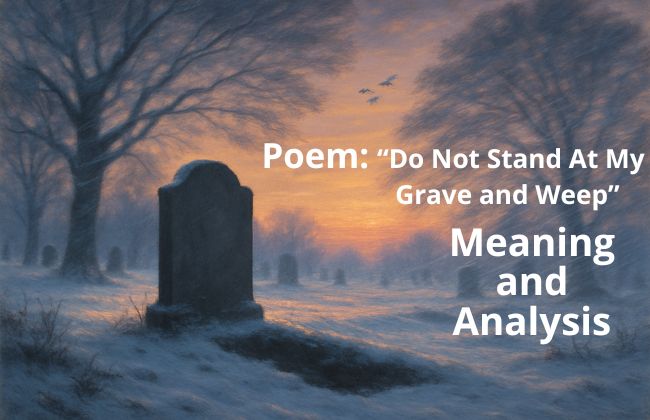
Simple yet profound, its verses resonate with those navigating the depths of loss, offering comfort and a unique perspective on life, death, and eternity.
Written in the 1930s, this enduring masterpiece transcends time, culture, and individual experience, often shared at funerals, memorials, and moments of heartfelt reflection.
Its beauty lies in its ability to provide solace with a quiet reassurance about the continuation of love and existence beyond physical departure.
But what is it about this brief yet powerful poem that has made it a source of strength and comfort for generations? Join us as we uncover the nuances of Frye’s words and explore why they continue to touch hearts worldwide.
Do Not Stand At My Grave And Weep by Mary Elizabeth Frye
Do not stand at my grave and weep
I am not there. I do not sleep.
I am a thousand winds that blow.
I am the diamond glints on snow.
I am the sunlight on ripened grain.
I am the gentle autumn rain.
When you awaken in the morning's hush
I am the swift uplifting rush
Of quiet birds in circled flight.
I am the soft stars that shine at night.
Do not stand at my grave and cry;
I am not there. I did not die.
Summary of the Poem
“Do Not Stand at My Grave and Weep” is a 12-line poem written from the perspective of a deceased speaker addressing their loved ones. The speaker urges mourners not to grieve at their grave, asserting that they are not confined to it but exist in the natural world.
Through vivid imagery, the speaker describes their presence in elements like the wind, snow, sunlight, rain, birds, and stars, emphasizing their continued existence beyond physical death.
The poem concludes by reiterating that the speaker has not truly died, offering comfort and encouraging the living to find solace in nature and memories.
Themes and Emotional Impact
The poem’s themes resonate deeply, providing comfort to those grappling with loss.
Below are the primary themes and their emotional effects:
Themes
- Transcendence of Death: The poem challenges the finality of death, suggesting the speaker’s spirit persists in nature. Lines like “I am not there. I do not sleep” reject the idea of death as an end, offering hope.
- Eternal Presence and Connection: The speaker asserts their presence in natural phenomena, symbolizing an unbreakable bond with the living. This fosters a sense of continued companionship.
- Comfort and Solace: Written to console, the poem encourages mourners to find peace in nature rather than sorrow at the grave, reframing grief as a celebration of life.
- Spirituality and Interconnectedness: The poem’s spiritual tone implies a universal connection between the soul and the cosmos, appealing to readers seeking meaning beyond the physical.
- Celebration of Life: By focusing on vibrant natural imagery, the poem urges readers to live fully, honoring the deceased through appreciation of life’s beauty.
Emotional Impact
The poem’s direct address and soothing tone create an intimate connection with readers, alleviating the pain of loss. Its hopeful message—that the deceased remain present in everyday beauty—transforms grief into a reflective, uplifting experience.
The poem’s widespread use at funerals and its translations into languages like Spanish, Hindi, and Japanese underscore its universal appeal.
Structure and Form
The poem’s structure enhances its accessibility and emotional power:
- Length and Stanza: It consists of 12 lines in a single stanza, creating a concise yet impactful monologue.
- Rhyme Scheme: The poem uses rhyming couplets (AABBCCDDEEFF), with perfect end rhymes like “weep/sleep” and “blow/snow.” This creates a musical quality that softens the theme of death.
- Meter: Primarily iambic tetrameter, with variations (e.g., anapestic rhythm in “Do not STAND at my GRAVE and WEEP”). Lines five and seven have extra syllables, adding emphasis to the speaker’s presence in nature.
- Repetition: The refrain “Do not stand at my grave and weep” appears at the beginning and end, bookending the poem and reinforcing its message. The phrase “I am” recurs, emphasizing the speaker’s eternal existence.
- Tone: The tone is authoritative yet comforting, urging mourners to shift from grief to acceptance.
This structured simplicity, combined with rhythmic flow, makes the poem easy to memorize and recite, contributing to its popularity at memorials.
Imagery and Symbolism
The poem’s vivid imagery and symbolism create a powerful sensory experience, bridging the physical and spiritual realms.
Imagery
- Natural Elements: The poem paints vivid pictures of nature, such as “a thousand winds that blow,” “diamond glints on snow,” “sunlight on ripened grain,” “gentle autumn rain,” “quiet birds in circled flight,” and “soft stars that shine at night.” These images evoke beauty and tranquility, comforting mourners by connecting the deceased to familiar, life-affirming scenes.
- Sensory Appeal: The imagery engages multiple senses—sight (glinting snow, shining stars), touch (gentle rain, rushing wind), and sound (morning’s hush, birds’ flight)—making the speaker’s presence tangible.
Symbolism
- Wind: Represents freedom and omnipresence, suggesting the speaker’s spirit is unbound and pervasive.
- Snow and Diamond Glints: Symbolize purity and eternal beauty, implying the speaker’s essence endures in pristine forms.
- Sunlight and Grain: Evoke vitality and growth, reinforcing life’s continuity.
- Rain: Signifies renewal and emotional cleansing, offering comfort.
- Birds: Symbolize freedom and transcendence, with their circular flight suggesting eternity.
- Stars: Represent guidance and permanence, a celestial presence watching over the living.
Line- by- line analysis poem “Do Not Stand At My Grave And Weep”
Lines 1-2:
Do not stand at my grave and weep,
I am not there. I do not sleep.
The speaker begins with a direct command, urging mourners not to grieve at their grave. The assertion “I am not there” challenges the traditional association of the grave with the deceased, emphasizing the spirit’s transcendence.
Lines 3-6:
I am a thousand winds that blow,
I am the diamond glints on snow.
I am the sunlight on ripened grain,
I am the gentle autumn rain.
These lines use metaphors to depict the speaker’s presence in nature. The imagery of wind, snow, sunlight, and rain conveys freedom, beauty, and comfort, reassuring mourners of the speaker’s eternal connection to the world.
Lines 7-9:
When you awaken in the morning’s hush,
I am the swift uplifting rush
Of quiet birds in circled flight.
The tone shifts to one of peace and hope. The speaker describes their presence in serene, uplifting moments, such as the morning calm and the graceful flight of birds, offering solace to the grieving.
Lines 10-12:
I am the soft stars that shine at night.
Do not stand at my grave and cry;
I am not there. I did not die.
The poem concludes with a reaffirmation of the speaker’s spiritual presence. The repetition of “I am not there” and “I did not die” reinforces the message of immortality and the continuity of life.
You might also like: